How Digital Business Model Has Contributed to the Success of Amazon.com
Amazon.com, Inc. (Amazon) has achieved success over the years based on a focused business model upon which it has built a diversified business. From its formation as an online bookshop in 1994, Amazon has achieved significant growth over the years to offer diversified products and intimidate traditional industries. Amazon has been able to disrupt the retail sector through the expansion of its diverse e-commerce platform and economies of scale to provide customers with various services. As evident from the company’s most recent annual report, Amazon has grown its net sales progressively over the last five years, with the sales more than doubling from $107.0 billion in 2015 to $280.5 billion in 2019 (Amazon, 2020). Moreover, the company’s operating income increased from $2.2 billion in 2015 to $14.5 billion in 2019 during the same period.
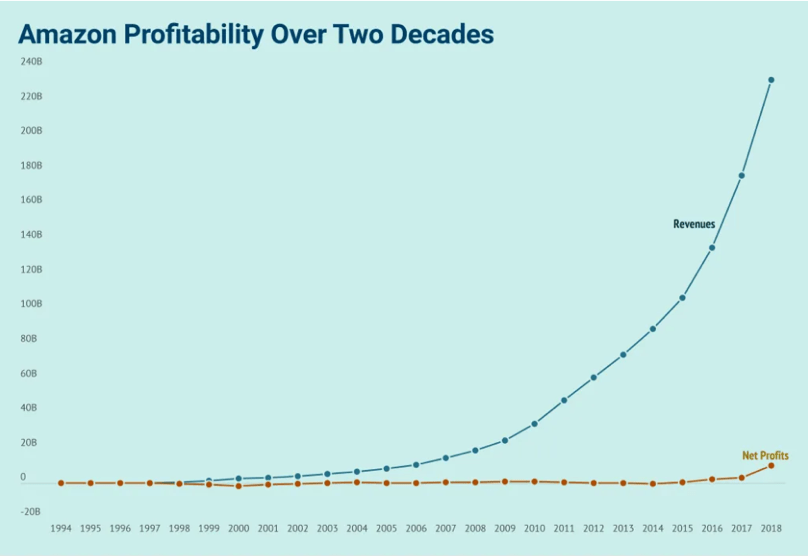
Figure 1- Amazon’s profitability over the years
Source- [Cuofano, 2018]
Such growth has arisen from a focused digital model that has emphasized diversity and convenience for customers, thereby improving trust and overall satisfaction.
The success of Amazon’s digital business model has been enabled by the entity’s successful implementation of different components. As Weill and Woerner (2013) illustrate, digital business models, comprise of three core components, namely content, experience, and platform. The content refers to the information that the company provides to help customers in choosing its products. Experience refers to the packaging of the product, which influences a customer’s satisfaction with the product. The platform refers to the infrastructure that the company has established to facilitate the delivery of the product. As discussed subsequently, Amazon’s success has been enabled by its impressive execution of these three aspects of the digital business model.
One of the reasons that have enabled Amazon to grow significantly is the innovative approach it uses to deliver content. For example, apart from the products the entity buys for resale, Amazon also offers third-parties a platform to sell their products which has increased from 3 per cent to 58 per cent of the total online sales of the brand (Amazon, 2020). Such an approach has ensured that Amazon offers a wide variety of products under a single platform offering customers with a seamless experience.
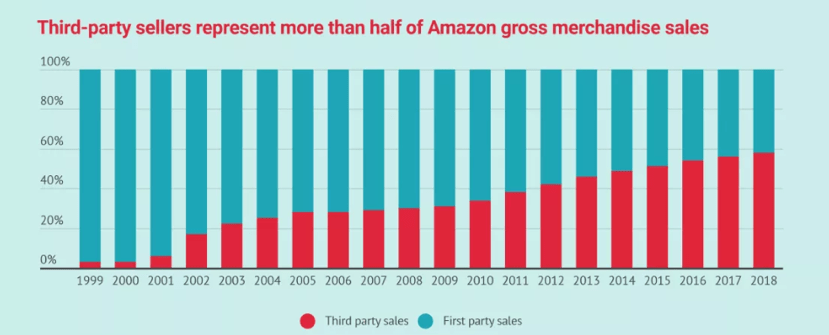
Figure 2- Third-party sales on e-commerce channels as digital strategy
Source- [Cuofano, 2018]
Apart from such diversity of products, Amazon enhances the richness of the products it avails by offering customers opportunities to review the products they have purchased. Such an approach is evident for the books the company offers, where a potential client can access reviews by customers to decide whether to buy the book or not. These approaches ensure that Amazon has diverse product options, thereby giving consumers with convenience purchasing experience online (Blaschke et al., 2017).
Apart from the content, Amazon has also invested in improving customer experience, which is the main reason behind its success. Such enhanced experience has enabled Amazon to segment its market by offering subscription services that provide customers with enhanced service. The Amazon Prime service offers customers benefits such as discounts on some products and faster delivery on products (Amazon, 2020). For example, the company started same-day delivery of products in response to customer demand for faster delivery of products; this service has since improved through the set-up of ‘mini-fulfilment’ centres (Perez, 2020). Such fulfilment centres enable the company to shorten the distance between the locations of its warehouses and customers and thus deliver products on time. This business idea has helped Amazon to provide consumers with convenience shopping options and helped them to buy products within time.
Amazon’s growth has also been achieved through the impressive infrastructure that it has built over the years. It has enabled the company to foster digital disruption through platforms and technologies like Amazon Go, Amazon pay, Amazon prime video, AWS and other digital businesses. Moreover, through Kindle, the company was also among the first to launch the e-book versions of print books, thereby enabling customers to access the books at a lower cost (Blaschke et al., 2017). Such infrastructure has enabled the company to the segment it’s market via price differentiation further and helped it to retain customers who would be otherwise repelled by high prices.
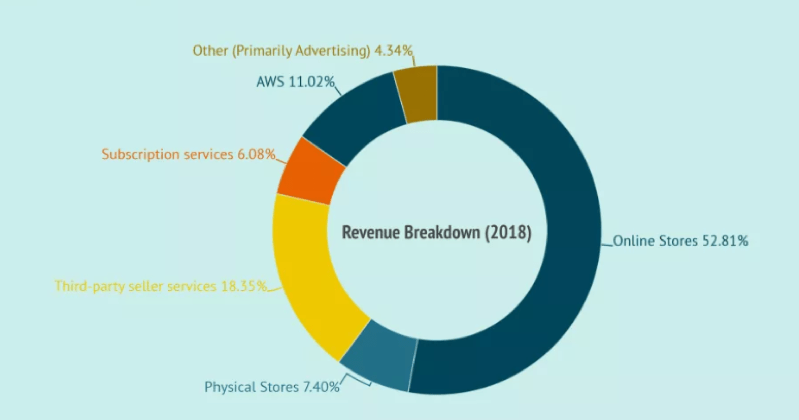
Figure 3- Revenue breakdown of Amazon’s business segments
Source- [Cuofano, 2018]
The revenue breakdown of Amazon for 2018, reveals much about its digital business model and its importance in revenue generation for the brand. A closer look towards its digital businesses has shown they are fast-growing business units as compared to other segments (Amazon, 2020). Amazon’s success in its business has been achieved through its focused digital business model. As illustrated above, Amazon has enhanced its business through impressive execution of content, customer experience and platform. Such performance has provided customers with choice and convenience, making Amazon the most preferred e-commerce entity in the world. In order to make the digital business model successful, it is essential to focus on giving customers exactly what they need and deliver a seamless customer experience.
References
Amazon.com, Inc. (2020). Form 10-k: Annual report for the fiscal year ended December 31, 2019. Amazon.com, Inc. Retrieved from https://ir.aboutamazon.com/static-files/63a014ac-bd47-42ce-b548-022a90d96e9a
Weill, P., & Woerner, S. L. (2013). Optimizing your digital business model. MIT Sloan Management Review, 54(3), 71-78.
Blaschke, M., Cigaina, M., Riss, U. V., & Shoshan, I. (2017). Designing business models for the digital economy. In Shaping the Digital Enterprise (pp. 121-136). Springer, Cham.
Cuofano, G. (2018). How Amazon Makes Money: Amazon Business Model in a Nutshell. Fourweekmba. Retrieved from https://fourweekmba.com/amazon-business-model/
Perez, S. (2020, March 3). Amazon makes its same-day delivery service faster in select US cities. Tech Crunch. Retrieved from https://techcrunch.com/2020/03/03/amazon-makes-its-same-day-delivery-service-faster-in-select-u-s-cities/
 Aozhe's blog