特色

Transformation in the role of marketing managers

I have always aimed to develop my future career in marketing field in the digital era. Role of a marketing manager has undergone tremendous change after the advent of IT technologies, social media and mobile technologies. As highlighted by Chaffey and Ellis-Chadwick (2019), marketing field has been transformed as digital technologies have paved way for multi-channel marketing strategies. So role of a marketing manager has changed as they are expected to have knowledge and skill not only in traditional marketing methods but also in digital marketing methods like paid media, owned media and earned media as presented in the below figure. 
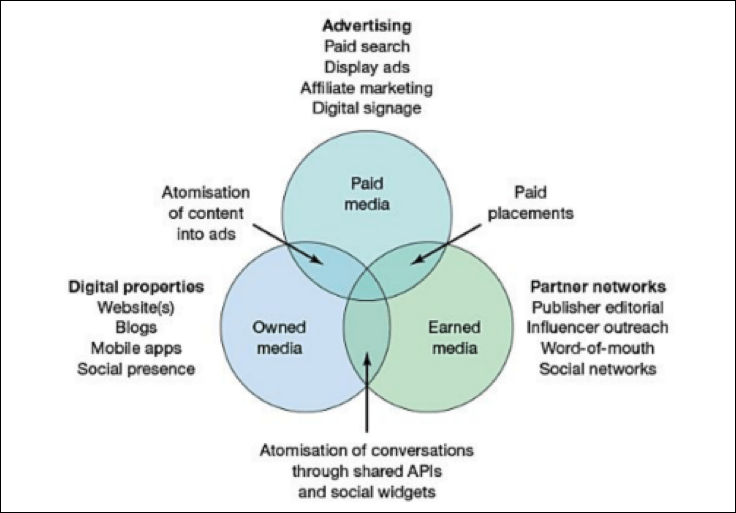
Figure 1: Latest technologies in marketing field

Source: Chaffey and Ellis-Chadwick (2019)

Traditional marketing strategy of using four P’s (Product, Price, Place and Promotion) to develop effective marketing strategies have become outdated in the current digital era. Companies are actively using social media platforms like Facebook, Twitter etc. to reach out to customers, empower them and be more interactive as stated by Pantano et al. (2019). There is drastic change in the role of a marketing manager to consider various other dimensions like physical evidence, people and process as discussed by Saidani and Sudiarditha (2019). So the role of a marketing manager has to not only focus on marketing a product but also to understand the customer needs and trends on online and offline platform and deliver value through online content and interaction.

It has to be noted that marketing managers are expected to have knowledge in marketing principles and theories and possess extensive knowledge and skill in digital tools, and using them for developing marketing strategies and marketing operations as stated by Royle and Liang (2014). Role of marketing managers have shifted their focus on online marketing research, interactive communication, channel and customer relationship management etc. And more specifically, digital marketing manager job role demands an individual to have skills in corporate communication and digital communication and technical knowledge. 
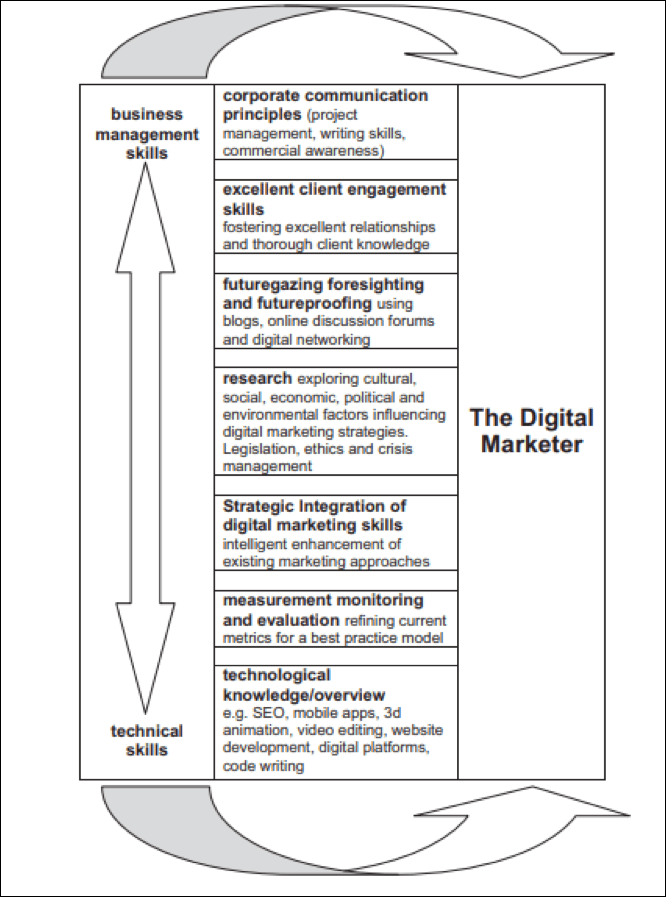
Figure 2: Skills for a digital marketer

Source: Royle and Liang (2014)

Role of a marketing manager has emerged in a different dimension to conduct evaluation of digital marketing activities, understand the metrics like conversion rate, web traffic, cost per lead, click through rate, brand awareness, returning visitors, acquisition cost etc. There is change in the focus of a marketing manager towards customer orientation. As indicated in the below figure, a marketing manager in a digital era has to emphasize on customer orientation rather than product orientation as stated by Di Gregorio et al. (2019).
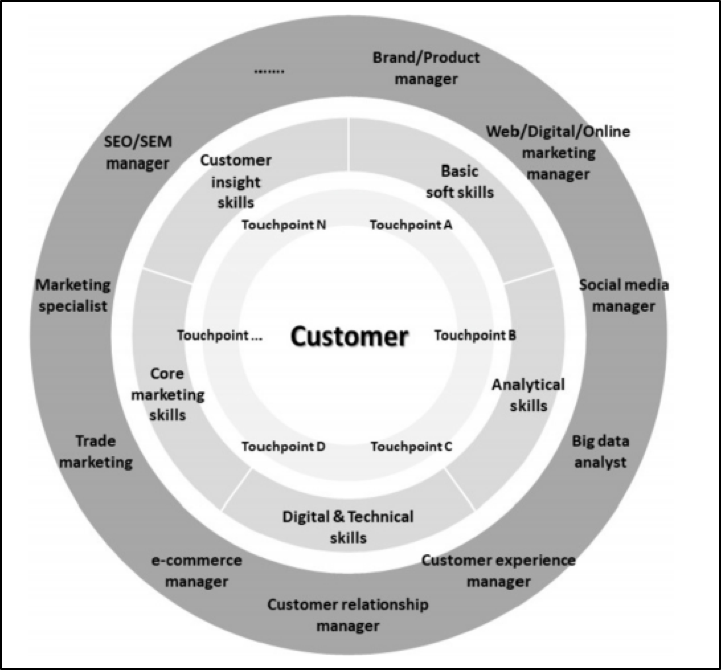
Figure 3: Customer-orientation by marketing managers of digital era

Source: Di Gregorio et al. (2019)

Currently, role of marketing managers are described as digital marketing, social media marketing, e-commerce marketing etc. and the key skill expected from digital marketing managers are being customer focused and use digital data for analytics. Digital technologies have widened the scope for marketing managers to interact with customers through various touch points (virtual and physical) and travel along with a customer through their whole shopping journey as described by Lemon and Verhoef (2016). 

Future of Marketing

Future role of marketing managers is going to be high demanding with use of different technologies like Artificial Intelligence, IoT, Big Data, Chatbot etc. in order to ensure customer experience. Role of marketing managers will shift in delivering exceptional shopping experience to customers in both store and online platforms. In future, marketing managers’ role will engage in working with interdisciplinary teams and handle omni-channel strategies (Grewal et al. 2020). As indicated by Holmlund et al. (2020), future of marketing is to ensure customer experience which is considered to be a sustainable strategy for gaining competitive advantage. Customer experience can be ensured with the use of Big Data Analytics. In future, marketing managers will rely on technologies like Big Data to gain insight into customers, psychographic, behavioural and market insights.

Future of marketing strategies is going to emphasize on experiential marketing. As indicated by Yeh et al. (2019), marketing managers of the future have to develop values like increased customer engagement, gain more online visibility and brand affinity using experiential marketing. Managers have to be more creative in developing experiential marketing strategies like product testing or workshops or tour of the production facility etc. 
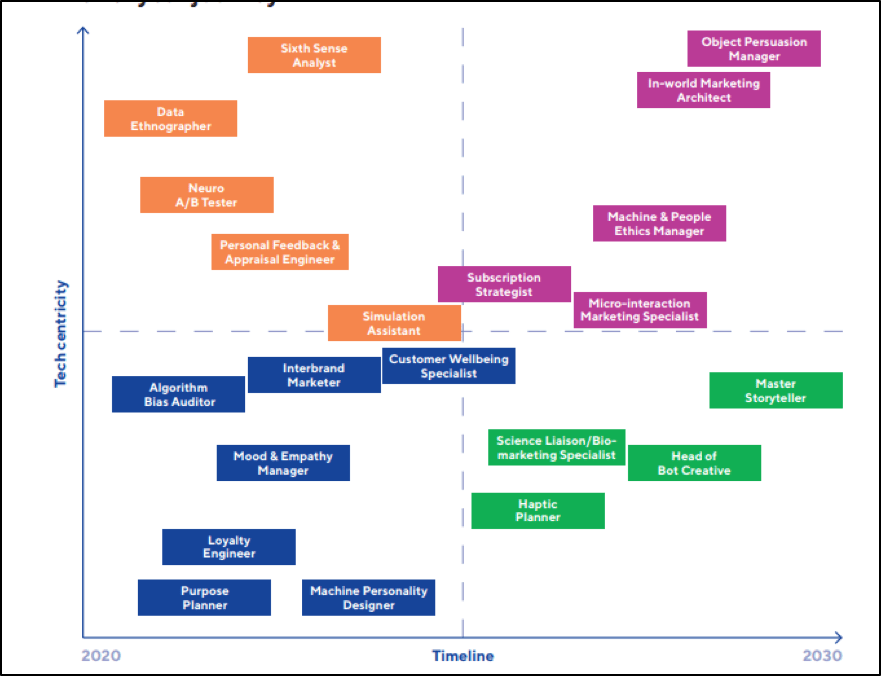
Figure 4: Future marketing roles

Source: Cognizant (2019)

So, in the days to come, marketing manager roles may be more interesting as presented in the above figure. Future role of marketing manager is going to be highly analytical and will demand strong communication skills, critical thinking, develop various insights and sustainable plans to deliver value and customer experience, be flexible and adaptable to diverse cultures. More importantly, role of future marketing managers will be to leverage on technology and data to analyse customer and market trends; customise marketing communication, use omni-channel strategy and personalisation to deliver exceptional customer experience and boost brand reputation by providing value and experience to customers.

References

Chaffey, D. and Ellis-Chadwick, F., 2019. Digital marketing. Pearson UK.

Cognizant., 2019. 21 Marketing jobs of the future. [Online] Available at: https://www.cognizant.com/whitepapers/21-marketing-jobs-of-the-future-codex4428.pdf[Accessed 12thFebruary 2020].

Di Gregorio, A., Maggioni, I., Mauri, C. and Mazzucchelli, A., 2019. Employability skills for future marketing professionals. European Management Journal37(3), pp.251-258.

Grewal, D., Hulland, J., Kopalle, P.K. and Karahanna, E., 2020. The future of technology and marketing: a multidisciplinary perspective.

Holmlund, M., Van Vaerenbergh, Y., Ciuchita, R., Ravald, A., Sarantopoulos, P., Ordenes, F.V. and Zaki, M., 2020. Customer experience management in the age of big data analytics: A strategic framework. Journal of Business Research.

Lemon, K.N. and Verhoef, P.C., 2016. Understanding customer experience throughout the customer journey. Journal of marketing80(6), pp.69-96.

Pantano, E., Priporas, C.V. and Migliano, G., 2019. Reshaping traditional marketing mix to include social media participation. European Business Review.

Royle, J. and Laing, A., 2014. The digital marketing skills gap: Developing a Digital Marketer Model for the communication industries. International Journal of Information Management34(2), pp.65-73.

Saidani, B. and Sudiarditha, I.K.R., 2019. Marketing Mix-7ps: The Effect on Customer Satisfaction. Jurnal Pendidikan Ekonomi Dan Bisnis (JPEB)7(1), pp.72-86.

Yeh, T.M., Chen, S.H. and Chen, T.F., 2019. The relationships among experiential marketing, service innovation, and customer satisfaction—A case study of tourism factories in Taiwan. Sustainability11(4), p.1041.

Final blog post

The digital business model is already ubiquitous in our lives, and I have never stopped to look at it seriously when I am busy enjoying the convenient life brought by digitalisation. The reason I chose this course at the beginning of the semester was also because I wanted to understand how digitisation works. During this course, I learned how to build an excellent blog and how to become an excellent blogger. And the digital business model has a prototype in my mind, making me more confident to face the future test.

From Siying’s blog (Lu, 2020), I learned that the original Zara’s seemingly declining approach is actually to retreat. In the face of increasing store rents, it has closed its stores aggressively and is the first in the industry to switch to an online store. Let me understand that the digital opportunity does not allow you to hesitate. Once you board the ship of digital business model, its development speed is faster than others imagine.

By reading tang W’s blog (Tang,2020), I learned how digital commercialization can promote a small chat software company to a successful digital entertainment business empire.

And through Zhichao’s blog (Zhang, 2020) , I learned that it turns out that human beings can achieve integration through digitalization every day.

There is no doubt that the wave of digital transformation has swept through. In the next 10-20 years, the application of digital technology will reshape the industry value chain and industry competition pattern. For enterprises, the issue that needs to be considered is not whether to do digital transformation, but how to plan a reasonable digital transformation strategy and ensure effective implementation. And I can give myself a more precise positioning by studying this course. I know that I lack knowledge at the technical level, but the tool level derived from the technical level may be my stage, for example, from organizational diagnosis, talent Three layers of evaluation and learning development have developed many evaluation tools. I can use these tools to improve work efficiency. From another aspect, the personal perspective page on the market now integrates employee personal information, talent development trajectory, personal evaluation data, and cross-analysis to form a talent portrait. When I want to quickly understand an individual employee, I only need to bring up the employee’s personal interface to clearly understand all aspects of the individual’s information.

Reference:

Lu, S. (2020). How the digital business model contributed to Zara’s success. Retrieved 4 April 2020, from https://kasiying.design.blog/2020/02/28/118/

Tang, W. (2020). How digital business model brings Tencent to success. Retrieved 4 April 2020, from https://shingshing.home.blog/2020/03/05/how-digital-business-model-brings-tencent-to-success/

Zhang, Z. (2020). WordPress.com. Retrieved 4 April 2020, from https://wordpress.com/home/hot0721.wordpress.com

How Digital Business Model Has Contributed to the Success of Amazon.com

How Digital Business Model Has Contributed to the Success of Amazon.com

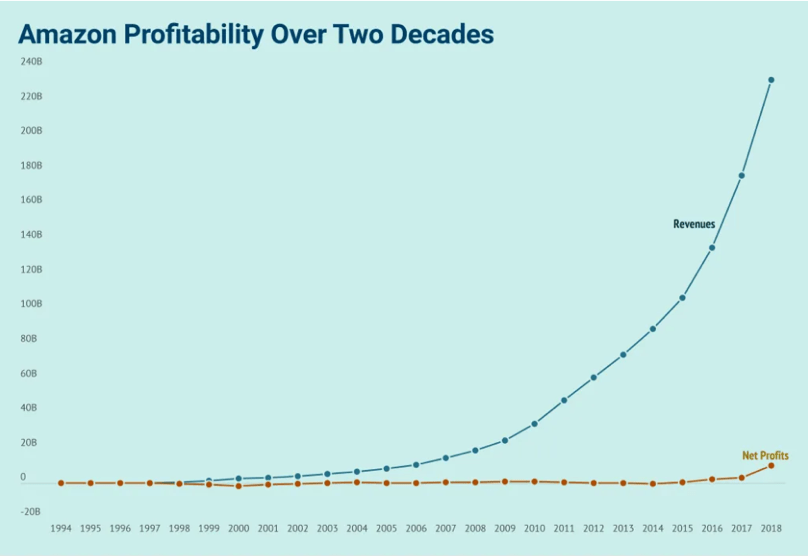
Amazon.com, Inc. (Amazon) has achieved success over the years based on a focused business model upon which it has built a diversified business. From its formation as an online bookshop in 1994, Amazon has achieved significant growth over the years to offer diversified products and intimidate traditional industries. Amazon has been able to disrupt the retail sector through the expansion of its diverse e-commerce platform and economies of scale to provide customers with various services. As evident from the company’s most recent annual report, Amazon has grown its net sales progressively over the last five years, with the sales more than doubling from $107.0 billion in 2015 to $280.5 billion in 2019 (Amazon, 2020). Moreover, the company’s operating income increased from $2.2 billion in 2015 to $14.5 billion in 2019 during the same period.

Figure 1- Amazon’s profitability over the years

Source- [Cuofano, 2018]

Such growth has arisen from a focused digital model that has emphasized diversity and convenience for customers, thereby improving trust and overall satisfaction.

The success of Amazon’s digital business model has been enabled by the entity’s successful implementation of different components. As Weill and Woerner (2013) illustrate, digital business models, comprise of three core components, namely content, experience, and platform. The content refers to the information that the company provides to help customers in choosing its products. Experience refers to the packaging of the product, which influences a customer’s satisfaction with the product. The platform refers to the infrastructure that the company has established to facilitate the delivery of the product. As discussed subsequently, Amazon’s success has been enabled by its impressive execution of these three aspects of the digital business model.

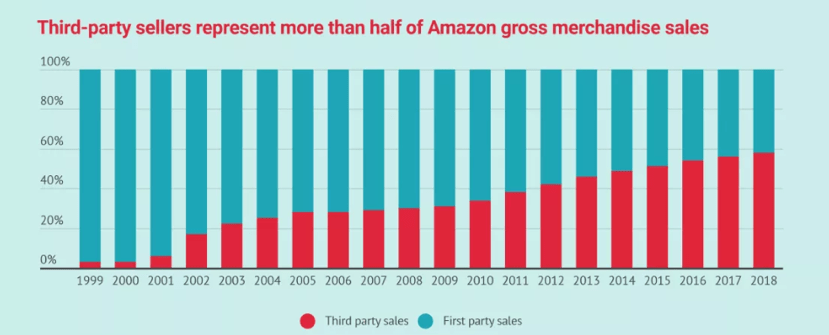
One of the reasons that have enabled Amazon to grow significantly is the innovative approach it uses to deliver content. For example, apart from the products the entity buys for resale, Amazon also offers third-parties a platform to sell their products which has increased from 3 per cent to 58 per cent of the total online sales of the brand (Amazon, 2020). Such an approach has ensured that Amazon offers a wide variety of products under a single platform offering customers with a seamless experience. 

Figure 2- Third-party sales on e-commerce channels as digital strategy

Source- [Cuofano, 2018]

Apart from such diversity of products, Amazon enhances the richness of the products it avails by offering customers opportunities to review the products they have purchased. Such an approach is evident for the books the company offers, where a potential client can access reviews by customers to decide whether to buy the book or not. These approaches ensure that Amazon has diverse product options, thereby giving consumers with convenience purchasing experience online (Blaschke et al., 2017).

Apart from the content, Amazon has also invested in improving customer experience, which is the main reason behind its success. Such enhanced experience has enabled Amazon to segment its market by offering subscription services that provide customers with enhanced service. The Amazon Prime service offers customers benefits such as discounts on some products and faster delivery on products (Amazon, 2020). For example, the company started same-day delivery of products in response to customer demand for faster delivery of products; this service has since improved through the set-up of ‘mini-fulfilment’ centres (Perez, 2020). Such fulfilment centres enable the company to shorten the distance between the locations of its warehouses and customers and thus deliver products on time. This business idea has helped Amazon to provide consumers with convenience shopping options and helped them to buy products within time.

Amazon’s growth has also been achieved through the impressive infrastructure that it has built over the years. It has enabled the company to foster digital disruption through platforms and technologies like Amazon Go, Amazon pay, Amazon prime video, AWS and other digital businesses. Moreover, through Kindle, the company was also among the first to launch the e-book versions of print books, thereby enabling customers to access the books at a lower cost (Blaschke et al., 2017). Such infrastructure has enabled the company to the segment it’s market via price differentiation further and helped it to retain customers who would be otherwise repelled by high prices.

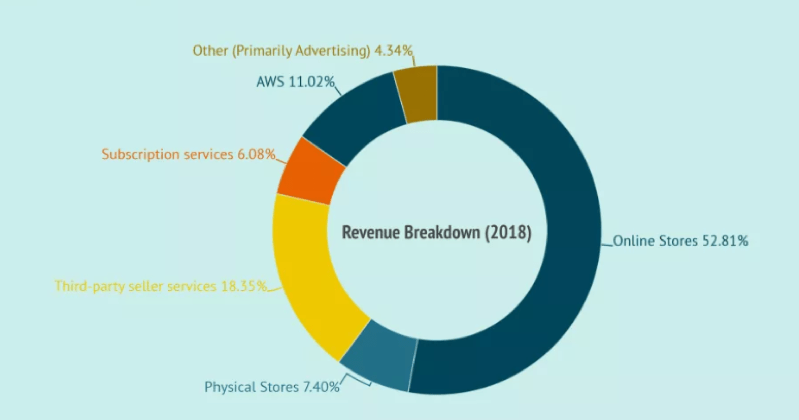
Figure 3- Revenue breakdown of Amazon’s business segments

Source- [Cuofano, 2018]

The revenue breakdown of Amazon for 2018, reveals much about its digital business model and its importance in revenue generation for the brand. A closer look towards its digital businesses has shown they are fast-growing business units as compared to other segments (Amazon, 2020). Amazon’s success in its business has been achieved through its focused digital business model. As illustrated above, Amazon has enhanced its business through impressive execution of content, customer experience and platform. Such performance has provided customers with choice and convenience, making Amazon the most preferred e-commerce entity in the world. In order to make the digital business model successful, it is essential to focus on giving customers exactly what they need and deliver a seamless customer experience.

References

Amazon.com, Inc. (2020). Form 10-k: Annual report for the fiscal year ended December 31, 2019. Amazon.com, Inc. Retrieved from https://ir.aboutamazon.com/static-files/63a014ac-bd47-42ce-b548-022a90d96e9a

Weill, P., & Woerner, S. L. (2013). Optimizing your digital business model. MIT Sloan Management Review, 54(3), 71-78.

Blaschke, M., Cigaina, M., Riss, U. V., & Shoshan, I. (2017). Designing business models for the digital economy. In Shaping the Digital Enterprise (pp. 121-136). Springer, Cham.

Cuofano, G. (2018). How Amazon Makes Money: Amazon Business Model in a Nutshell. Fourweekmba. Retrieved from https://fourweekmba.com/amazon-business-model/

Perez, S. (2020, March 3). Amazon makes its same-day delivery service faster in select US cities.  Tech Crunch. Retrieved from https://techcrunch.com/2020/03/03/amazon-makes-its-same-day-delivery-service-faster-in-select-u-s-cities/

Introduction

Hi my friend! I’m Aozhe from China and currently studying MSc International Business in University of Exeter. I used to major in business management at the University of Portsmouth.

My hobby is to record my life by taking photos of my daily life. In today’s society, digital technology is a road to the future. I hope learning digital business models can enrich my creative thinking.

通过 WordPress.com 设计一个这样的站点
从这里开始